
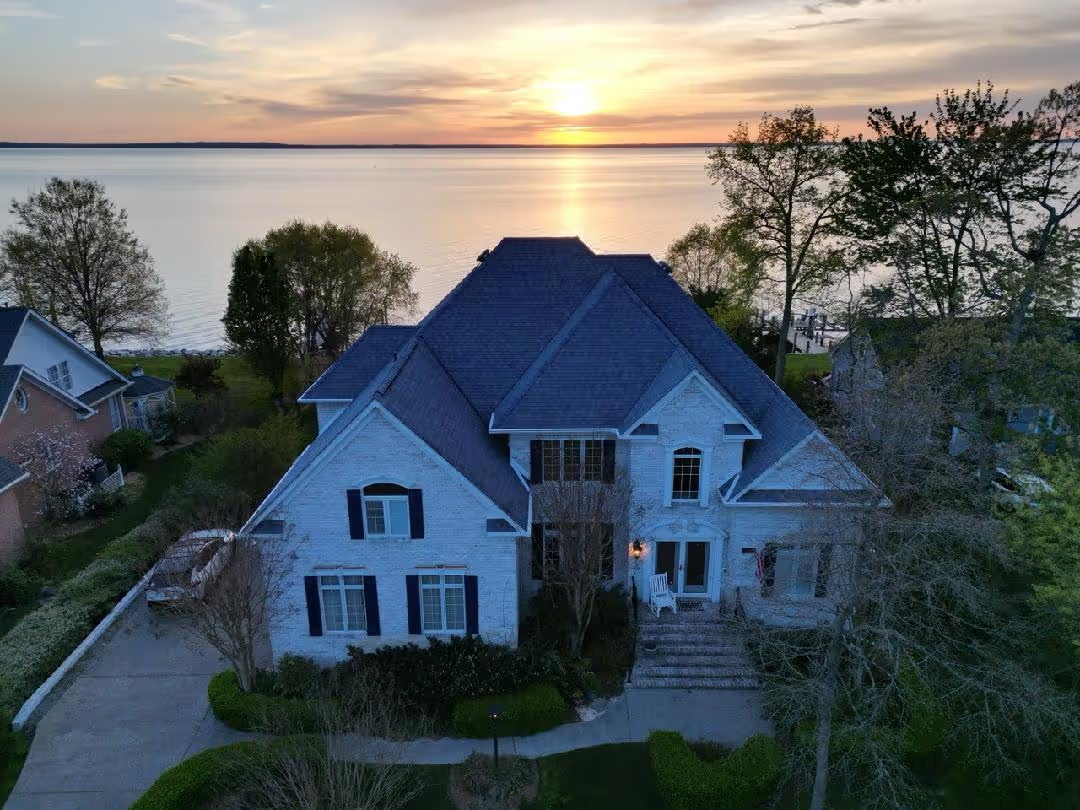
How to Choose the Right Roofing Contractor in Maryland
Choosing a roofing contractor is one of the more consequential home improvement decisions a Maryland property owner will make. A roof replacement or major repair involves real money, real deadlines, and materials that are expected to protect your property for decades. The right contractor brings licensing, insurance, clear documentation, and the technical knowledge to do the work correctly. The wrong one can leave you with code problems, warranty gaps, or an unfinished job.
This guide walks through what Maryland homeowners, commercial property owners, and property managers should verify before signing a roofing contract: state licensing requirements, certifications, building code considerations, storm damage documentation, warning signs to avoid, and practical questions to ask before the first shingle is touched.
Quick Answer: What Makes a Maryland Roofing Contractor Trustworthy?
Before getting into specifics, here is a checklist of core trust signals to look for when evaluating a roofing contractor in Maryland:
- Active MHIC license, verifiable through official state records
- Proof of general liability insurance and workers' compensation coverage
- Written estimate with a clear, detailed scope of work
- Explanation of materials, shingle system, and underlayment type
- Local Maryland project experience
- Manufacturer training or certification when applicable
- Clear warranty explanation covering both workmanship and materials
- Familiarity with local permit requirements
- Honest storm damage documentation process
- Transparent communication and realistic repair vs. replacement guidance
No single item on that list is a formality. Each one tells you something real about how the contractor operates.
Start by Verifying Maryland Roofing License Information
In Maryland, it is illegal for a contractor to perform home improvement work without a valid license issued by the Maryland Home Improvement Commission (MHIC). This applies to roofing, siding, windows, and nearly all residential exterior work. The requirement is not a technicality. It is enforced, and unlicensed contractors do operate in the state.
Homeowners can verify any contractor's license status through the Maryland Department of Labor's licensing lookup at labor.maryland.gov, or by calling MHIC directly at 410-230-6309. The search tool lets you look up a contractor by business name, personal name, license number, or location. It shows whether the license is active, when it expires, and whether any disciplinary action has been recorded.
Licensed contractors are required to display their MHIC license number on contracts and advertising. If a contractor cannot or will not provide this number, that is an immediate red flag.
Beyond licensing, homeowners can check for complaints through MHIC or review business records through other Maryland consumer resources. The MHIC maintains a Guaranty Fund that may compensate homeowners for certain losses caused by licensed contractors who fail to complete or properly perform work. That protection does not apply when the contractor is unlicensed.
Under Maryland law, a home improvement contract must be in writing and signed by both parties before work begins or any money is exchanged. The contract must include the contractor's name, address, and MHIC license number, a description of the work and materials, and approximate start and completion dates. Maryland law also caps the initial deposit at one-third of the total contract price.
Check Certifications, Manufacturer Training, and Warranty Details
Licensing confirms a contractor is legally authorized to work. Manufacturer certifications go a step further by showing the contractor has been trained by a roofing product manufacturer to install their systems correctly.
This matters for several reasons. Manufacturers often require specific installation methods for their products to qualify for extended system warranties. If a contractor installs the product improperly or is not approved by the manufacturer, the warranty may not be valid regardless of what the estimate promised. Manufacturer-certified contractors have typically completed product-specific training and meet eligibility requirements set by the manufacturer.
When evaluating certifications, it helps to understand the difference between warranty types:
- Material warranty: Covers defects in the roofing product itself, issued by the manufacturer. Duration and coverage terms vary by product line and certification level.
- Workmanship warranty: Covers installation errors, issued by the contractor. This is separate from the manufacturer's product warranty and varies by contractor.
- System warranty: Some manufacturers offer extended coverage that includes both materials and installation when a certified contractor installs an approved system. Requirements and eligibility vary.
Ask any contractor you are considering which warranty type covers your project, what triggers a warranty claim, and what is specifically excluded. Get the warranty terms in writing before work begins.
Golden Eagle Roofing LLC holds Atlas Pro+ certification and offers certified Atlas Pro+ roofing system installations for eligible properties. Golden Eagle also carries HAAG certification for roof inspections, a credential reflecting specialized training in evaluating roof conditions, storm damage, and damage documentation for residential and commercial properties.
Ask How the Contractor Handles Maryland Building Codes and Permits
Maryland building codes establish minimum requirements for how roofing work must be performed. The state operates under the Maryland Building Performance Standards (MBPS), which sets a baseline framework that counties and municipalities adopt and sometimes modify. Many Maryland jurisdictions have adopted the International Residential Code (IRC) for one and two-family dwellings, with local amendments applied at the county level.
What this means in practice is that code requirements can vary depending on where your property is located, whether it is residential or commercial, the scope of the project, and the type of materials being installed. There is no single Maryland-wide roofing code that applies identically in every jurisdiction across the state.
Some common roofing elements that Maryland building codes and the IRC address include:
- Ice and water shield at roof eaves and valleys
- Drip edge installation at roof edges
- Underlayment type and installation method
- Proper flashing at penetrations, valleys, and wall intersections
- Ventilation requirements for attic spaces
- Fastener type and pattern for shingle systems
- Structural sheathing and decking requirements
On permits: a full roof replacement that removes existing roofing down to the deck and installs a new system typically requires a building permit in most Maryland counties. Minor repairs, such as patching a few shingles without structural changes, may not require a permit depending on the jurisdiction. Requirements vary, and it is worth confirming with your county's building department or asking your contractor how permitting is handled for your specific project.
A contractor who cannot explain the permit process, avoids the question, or discourages you from pulling a permit when one may be required is not one you should trust with a major roofing project. Unpermitted work can create complications when selling a property and may affect insurance coverage or code compliance if discovered later.
Storm Damage Roofing vs. Older Roof Replacement: Understanding the Difference
The reason you need a new roof shapes what kind of contractor evaluation you need and what the inspection process should involve. Storm damage and age-related wear call for different documentation, different conversations with your insurance carrier, and different evaluation criteria.
Storm Damage Roof Inspections
After wind, hail, heavy rain, a fallen limb, or other severe weather, a qualified roofing contractor should inspect for specific evidence of weather-related damage. Common signs include:
- Missing or lifted shingles
- Creased or bruised shingles from hail impact
- Granule loss in concentrated areas
- Damaged or displaced flashing
- Exposed underlayment
- Damaged ridge caps, vents, or pipe boots
- Active roof leaks or ceiling stains inside the property
- Dented or damaged gutters
A competent storm damage contractor will document observed conditions with photos, written notes, and a clear scope of work. This documentation supports the insurance claim process if you file one.
It is important to understand that a roofing contractor cannot approve or guarantee an insurance claim. Insurance carriers and their adjusters determine whether damage qualifies for coverage based on policy terms, the age of the roof, and their own inspection findings. A contractor can inspect your roof, explain what they observed, provide an estimate, and meet with an adjuster if appropriate. What a contractor should not do is promise that your claim will be approved, guarantee a full replacement will be covered, or pressure you to sign a contract before your carrier has reviewed the damage.
For help navigating the storm damage documentation and inspection process in Maryland, visit Golden Eagle Roofing's storm damage and insurance claims page.
Older Roof Replacement Considerations
When a roof is aging out rather than storm-damaged, the evaluation looks different. Age-related wear includes brittle or curling shingles, widespread granule loss, deteriorated or missing flashing, poor ventilation, soft spots in the decking, a history of leaks, and discontinued shingle lines that make matching repairs difficult or impossible.
Discontinued shingles present a common challenge on older Maryland roofs. If the manufacturer no longer produces your current shingle color or profile, matching repairs can be difficult. This does not automatically mean a full replacement is required or that an insurance claim would be approved. What it does mean is that a contractor should be honest with you about the visible mismatch and the limitations of a partial repair versus a full system replacement.
Asphalt shingle lifespan varies depending on the product line, installation quality, ventilation, roof slope, local weather exposure, and maintenance history. No honest contractor should give a single guaranteed lifespan number without evaluating the specific roof. What they should give you is a clear explanation of current condition and your realistic repair versus replacement options.
Learn more about Maryland roof replacement and what the process involves for residential and commercial properties. If your roof shows signs of wear but you are not sure whether repair or replacement makes more sense, a professional roof inspection can help clarify the decision.
Red Flags to Watch For When Hiring a Maryland Roofer
The roofing industry includes contractors who operate with less than professional standards. Here are warning signs that should cause you to pause before signing anything:
- No MHIC license number provided: Any licensed Maryland contractor will share this on request. Reluctance to provide it is a serious concern.
- No written estimate: Verbal agreements leave you with no documentation if something goes wrong.
- Vague scope of work: The estimate should describe exactly what is being removed, what is being installed, and which materials are included.
- Upfront payment demand exceeding one-third of the contract price: Maryland law caps the initial deposit at one-third of the total price under the MHIC.
- Pressure to sign immediately: Legitimate contractors give you time to review an estimate and compare options.
- Promises of insurance claim approval: No contractor has authority to approve an insurance claim. Anyone who promises this is misleading you.
- Avoidance of permit and code questions: A knowledgeable contractor will address these directly and without hesitation.
- No material specifications: You should know exactly which shingle system, underlayment, and accessory products are being installed.
- No warranty explanation: Both workmanship and manufacturer warranties should be addressed in writing before work begins.
- No local presence or verifiable references: A contractor with no verifiable local history carries more risk on a significant project.
- Out-of-state storm chasers after a weather event: Following a major storm, out-of-area contractors often canvass neighborhoods. Verify licensing before engaging with anyone who approaches you unsolicited after a storm.
- No documentation process for storm damage: If a contractor cannot clearly explain how they document roof conditions for an insurance inspection, that is a concern.
What Should Be Included in a Roofing Estimate?
A professional roofing estimate is a detailed written document, not a single line price. Before signing anything, confirm that your estimate clearly addresses the following:
- Total roof area or scope of work
- Whether the existing system will be fully torn off or covered over
- Shingle or roofing system type, manufacturer, and product line
- Underlayment specification
- Flashing details, including step flashing, pipe boots, and penetrations
- Ice and water shield installation locations
- Ventilation assessment or planned improvements
- Decking replacement terms and cost structure if damaged boards are found after tear-off
- Cleanup and debris removal
- Permit handling, if applicable to the project
- Project timeline and anticipated start date
- Payment schedule
- Workmanship warranty terms
- Manufacturer warranty information
- Storm damage documentation scope, if relevant to your situation
If the estimate does not cover these items, ask for them to be added before you sign. A contractor who resists adding clarity to a written estimate is telling you something about how they operate.
Questions to Ask Before Hiring a Roofing Contractor in Maryland
Use this checklist during your contractor conversations:
- Are you licensed in Maryland, and what is your MHIC license number?
- How can I verify your license status?
- Do you carry general liability and workers' compensation insurance?
- Who will be on-site managing the project day to day?
- What roofing system are you recommending and why?
- Why are you recommending repair or replacement rather than the alternative?
- What warranties apply to this project and what do they specifically cover?
- Are there manufacturer certification requirements for this system to qualify for the listed warranty?
- Will this project require a building permit?
- How do you handle code compliance and what is your experience with local permitting in this area?
- If storm damage is a factor, how do you document conditions for an insurance inspection?
- How do you handle hidden decking damage discovered after tear-off?
- Do you have local Maryland project examples I can review?
- What does cleanup and site protection involve?
Why Local Maryland Roofing Experience Matters
Maryland presents roofing challenges that contractors without regional experience may not fully understand. The climate combines humid summers, cold winters, freeze-thaw cycles in the shoulder seasons, wind-driven rain from Chesapeake Bay-area weather systems, and seasonal storms that can produce significant wind and hail damage across the state.
A contractor with established Maryland experience understands the permitting expectations at the local building department level, the common roofing systems and problems in the region, and the importance of responding quickly after storms when multiple homeowners in a service area may need attention simultaneously.
Local experience also means accountability. A contractor who has worked in St. Mary's County, Charles County, Calvert County, Anne Arundel County, and surrounding Maryland communities for years has a local reputation to protect. They are available for follow-up if a question arises after installation, not just passing through after a weather event.
Golden Eagle Roofing LLC has served Southern Maryland and surrounding counties for over 20 years. The team handles residential roofing, commercial roofing and multi-family properties, storm damage documentation, and full system replacements across Maryland's Southern and Central regions. View completed projects and customer experiences on the testimonials and project case studies page.
Final Takeaway: Choose the Contractor Who Can Prove the Details
The best roofing contractor is not always the one with the lowest price. The right contractor is the one who can verify their license, explain their materials, document roof conditions honestly, understand your local code environment, and communicate clearly from the first estimate to the final inspection.
Take the time to verify the MHIC license, read the estimate carefully, ask the hard questions, and compare multiple written bids before making a decision. If something feels rushed, vague, or too good to be true, trust that instinct.
Golden Eagle Roofing LLC serves Maryland homeowners, property owners, and commercial clients with licensed, insured, and professionally documented roofing services. Whether you need a professional roof inspection, help after storm damage, a commercial roofing assessment, or a detailed estimate for a repair or replacement project, our team provides honest evaluations and clear documentation from the first call.
Contact Golden Eagle Roofing LLC to schedule a free roof inspection or request an estimate for any roofing project in Maryland.
Frequently Asked Questions
Do roofing contractors need to be licensed in Maryland?
Yes. Maryland law requires any contractor performing home improvement work, including roofing, to hold a valid license issued by the Maryland Home Improvement Commission (MHIC). It is illegal to perform home improvement work in Maryland without an active MHIC license.
How do I check if a roofing contractor is licensed in Maryland?
You can verify a contractor's MHIC license through the Maryland Department of Labor's occupational licensing search at labor.maryland.gov, or by calling MHIC at 410-230-6309. The search allows you to look up a contractor by name, business name, or license number and shows current license status and any recorded disciplinary action.
What should I ask a roofing contractor before hiring them?
Ask for their MHIC license number, proof of insurance, a written estimate with a detailed scope of work, material specifications, warranty terms for both workmanship and materials, and how they handle permit requirements. Ask why they are recommending repair or replacement and how they handle hidden damage discovered after work begins.
Should I call my insurance company or a roofer first after storm damage?
There is no single correct answer, but having a roofing contractor inspect and document the damage before or shortly after filing a claim can be useful. A contractor's written documentation of observed conditions may help support your claim. That said, you should not delay filing if your policy has reporting deadlines. Contact your insurance carrier and a qualified local contractor as soon as practical after a storm event.
How do I know if my roof damage is from a storm or old age?
Storm damage tends to appear in areas directly exposed to weather, often with concentrated impact patterns, creased shingles, granule displacement consistent with hail, or lifted sections consistent with wind. Age-related wear is typically more uniform, with widespread granule loss, brittleness, curling shingles, and deteriorated flashing that has degraded over time. A qualified roofing inspector can document findings and explain what they observed. Whether conditions qualify under your policy is ultimately determined by your insurance carrier.
Does a roof replacement in Maryland have to meet current building code?
Generally yes. When a permit is required and pulled, the work is typically required to meet the building code in effect at the time of the project. This can include requirements that have been updated since the original roof was installed. Requirements vary by county and project scope. Confirm current requirements with your contractor and local building department before work begins.
Do I need a permit to replace my roof in Maryland?
In most Maryland counties, a full roof replacement that removes the existing roofing system down to the deck requires a building permit. Minor repairs that do not involve structural elements may not require a permit depending on the jurisdiction. Permit requirements vary by county, municipality, and project type. Ask your contractor how they handle permitting and confirm requirements with your local building department if you have any questions about your specific project.
What should be included in a roofing estimate?
A complete roofing estimate should include the scope of work, tear-off details, shingle system and manufacturer, underlayment specification, flashing and penetration details, ice and water shield locations, ventilation assessment, decking replacement terms, cleanup and disposal, permit handling if applicable, project timeline, payment schedule, and warranty terms for both workmanship and materials.
What is the difference between a workmanship warranty and a manufacturer warranty?
A manufacturer warranty covers defects in the roofing product itself and is issued by the manufacturer. A workmanship warranty covers installation-related errors and is issued by the contractor. These are separate documents with different terms and coverage periods. Some manufacturers offer extended system warranties that include both when a certified contractor installs an approved product system. Review both in writing before signing a contract.
What are the biggest red flags when hiring a roofing contractor?
The most common warning signs include no MHIC license number provided, no written estimate, a vague or incomplete scope of work, a deposit request exceeding one-third of the contract price, promises of insurance claim approval, pressure to sign before you can review the estimate, avoidance of permit or code questions, and no clear documentation process for storm damage. Out-of-state contractors who appear in your neighborhood immediately after a major storm also warrant extra scrutiny before any agreement is made.